
Marketing Systems Engineering™ (MSE)

Turn your marketing
into a reliable system

Inputs

Identify and study your ideal customers online to understand when they are researching solutions and where they are most receptive to hearing from you.
ROUTINES

Deploy and optimize structured marketing routines that consistently attract attention, build trust, and encourage action across multiple digital channels.
PLATFORMS

Direct engaged prospects to valuable digital platforms such as websites, eCommerce experiences, or landing pages designed to convert attention into meaningful outcomes.
OUTPUTS

Generate measurable business results including qualified leads, online sales, subscriptions, or customer inquiries ready for your sales team to engage.
Every business leader eventually reaches a point where growth becomes impossible without one critical factor: consistent marketing performance.



"At ATRIUM we help business leaders replace unpredictable agency results with an engineered marketing system and routines designed to perform quarter after quarter."
Chris Lawson

ATRIUM the world’s first Marketing Systems Engineering™ (MSE) agency, was created specifically to deliver marketing consistency above all else.

Marketing Systems Engineering™ (MSE)
Marketing Systems Engineering™ (MSE) is a methodology for producing consistency from marketing efforts through applied systems engineering principles.

01
Map Connection Between Factors
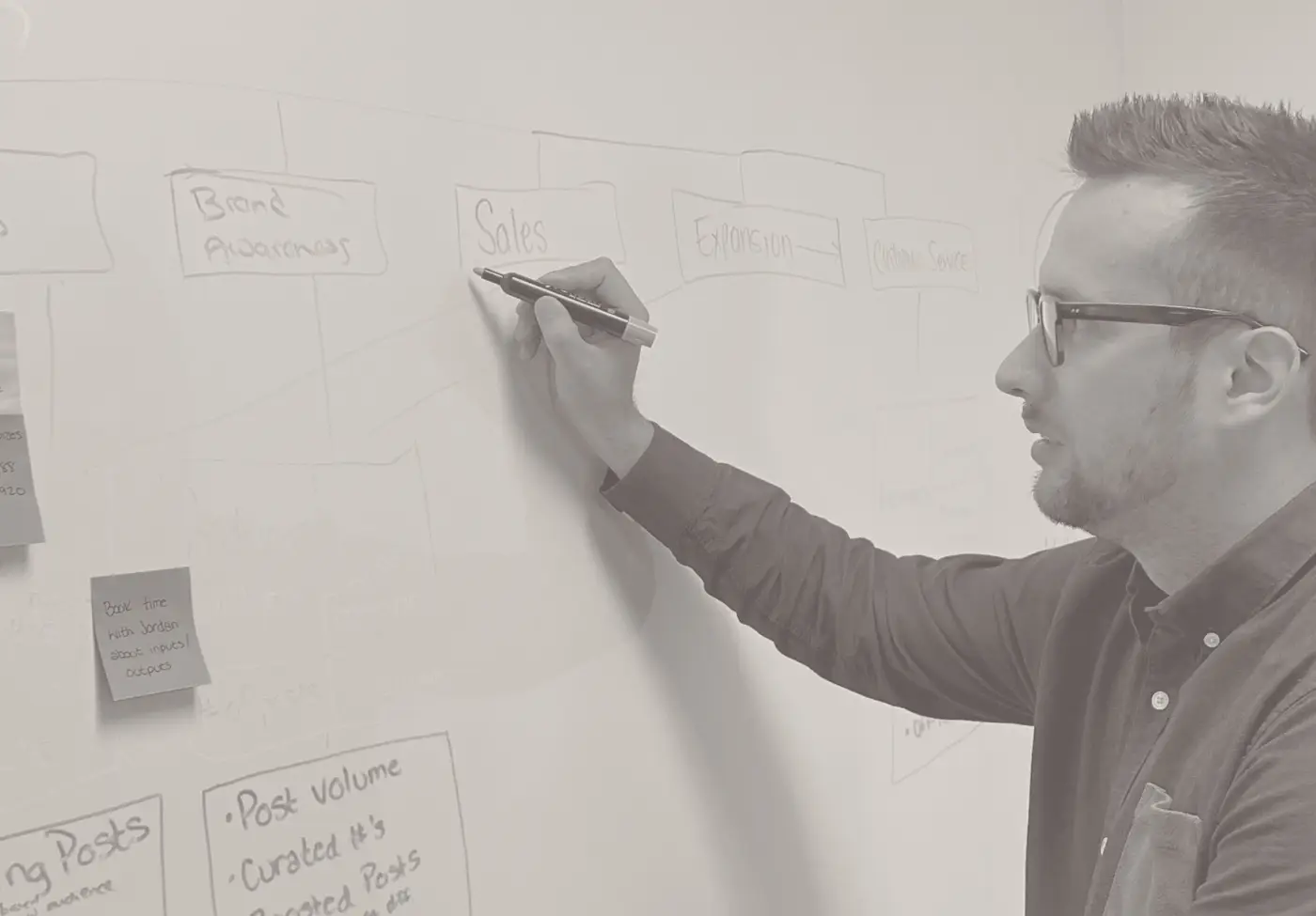
Every marketing system contains multiple interconnected factors including audiences, channels, platforms, and conversion points. MSE begins by mapping how these elements interact so opportunities, dependencies, and risks can be clearly understood.

02
Measure Key Connection Levers

03
Optimize Factors for Consistency
THE ATRIUM PERSPECTIVE
To gain consistency you need to engineer a system
Most agencies focus on campaigns designed to produce bursts of success. But campaigns alone cannot deliver predictable results.
Finally an agency that focuses on the right outcome, consistency. This is why ATRIUM invented the Marketing Systems Engineering™ model.
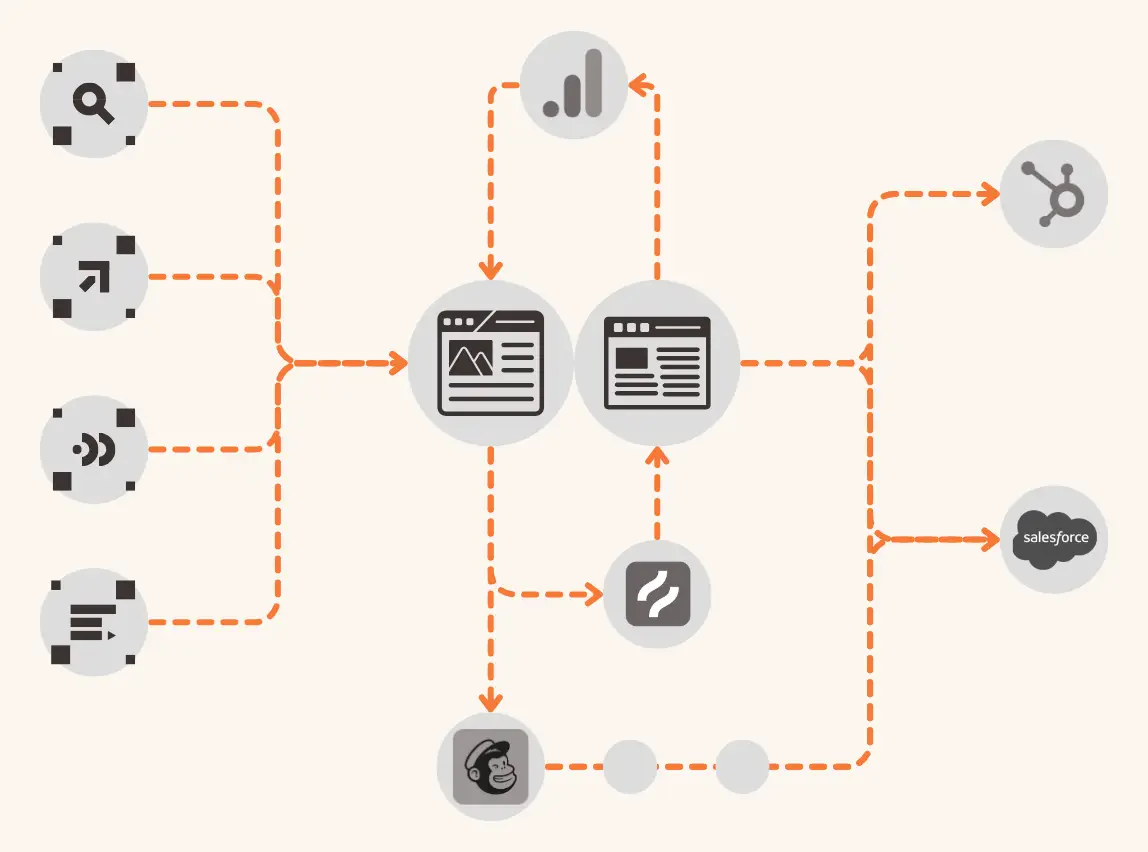
Marketing systems are made of four pillars

Inputs
Inputs represent the audiences, networks, and opportunities that feed attention and demand into your marketing system.

Routines
Routines are the structured marketing activities that consistently attract attention and guide prospects toward meaningful engagement.

Platforms

Outputs
Outputs represent the measurable business outcomes generated by the system such as leads, sales, signups, and customer inquiries.
ATRIUM builds reliable marketing systems

SYSTEM RESULTS
10X ROI

DATA DRIVEN OPTIMIZATION
Data Allows Systems to Function

EVERGREEN ASSET
Systems Perform Continuously
Systems drive consistent results that grow business

SEARCH
WEBSITE
ADVERTISING
CRO
Company ABC Co.
SEARCH
CRO
ADVERTISING
SOCIAL
Company ABC Co.

ADVERTISING
WEBSITE
Company ABC Co.
Understanding Marketing Systems Engineering™
FREQUENTLY ASKED QUESTIONS
Marketing Systems Engineering™ is a different way of thinking about marketing. These questions help explain how the model works and why it produces more reliable outcomes.
What is Marketing Systems Engineering™?
Marketing Systems Engineering™ is ATRIUM’s methodology for producing consistent marketing outcomes through the application of systems engineering principles. Instead of viewing marketing as a series of disconnected campaigns, channels, or creative ideas, MSE treats marketing as a coordinated system made up of inputs, routines, platforms, and outputs.
For business leaders, this changes the conversation entirely. The goal is no longer just to achieve a single spike in leads, sales, or engagement. The goal is to create a marketing system that can be measured, improved, and trusted over time. That reliability matters because business growth depends on confidence. Leaders need to know that the system supporting revenue generation is not based on luck, timing, or occasional wins, but on a structure designed to perform consistently quarter after quarter.
Why did ATRIUM create the MSE model?
ATRIUM created the MSE model after identifying a major flaw in the traditional agency model. Across the industry, agencies were often producing impressive campaigns and temporary successes, yet clients still left dissatisfied. At first glance, that seemed contradictory. If the campaigns worked, why were so many client relationships ending in frustration?
What we discovered was that clients were not actually hiring agencies for occasional success. They were hiring them because they needed consistency. A business leader can only hire staff, open a new location, invest in operations, or expand with confidence when marketing performance is stable enough to support those decisions. One great campaign does not solve that problem. Even several successful campaigns in a row do not solve it if the next one can fail unpredictably and shake confidence in the entire system.
MSE was ATRIUM’s answer to that root problem. We rebuilt the agency around the outcome clients truly needed: reliable, repeatable marketing performance.
How is MSE different from traditional marketing agencies?
Most traditional agencies organize themselves around services, tactics, or campaign execution. They may be highly creative, technically skilled, or strong in performance marketing, but the work is still often delivered as a sequence of initiatives rather than as a connected system. That can produce strong short-term results, but it often leaves business leaders with a deeper problem: they still cannot predict what will happen next quarter.
MSE is different because it begins with the assumption that marketing must function as a system. Inputs must be understood, routines must be operated consistently, platforms must be built to convert, and outputs must be measurable. That means ATRIUM is not simply asking, “How do we launch the next campaign?” We are asking, “How do we build a marketing system that performs reliably enough for leadership to make business decisions around it?”
For a business leader, this means less dependence on isolated wins and more confidence in the overall direction of the business. It creates a more stable relationship between marketing effort and business planning.
What problem does MSE solve for business leaders?
MSE solves the problem of marketing unpredictability. Many business leaders can tolerate occasional underperformance. What they cannot tolerate is uncertainty so persistent that it prevents them from planning the business with confidence. If marketing results rise and fall unpredictably, it becomes difficult to forecast revenue, staff appropriately, invest in growth, or commit to strategic expansion.
This is why inconsistency becomes such a serious business problem. It is not only frustrating from a marketing perspective. It affects hiring, budgeting, inventory, operations, expansion planning, and the confidence of leadership itself. A business may appear healthy on paper while still feeling impossible to scale because its demand generation is unreliable.
MSE addresses this by shifting the focus away from one-time campaign goals and toward building a system that can produce dependable outputs over time. That reliability is what allows leaders to move from reactive decision-making to confident growth planning.
Does MSE replace traditional marketing tactics?
No. MSE does not replace tactics such as SEO, advertising, content, or social media. Instead, it gives those tactics a more effective role inside a coordinated system. The issue is not that traditional marketing tactics are wrong. The issue is that they are often deployed in isolation, without enough connection to the rest of the customer journey or enough visibility into how they contribute to overall consistency.
Under the MSE model, tactics become routines. They are no longer treated as one-off acts of execution, but as repeatable components of a system designed to attract attention, guide engagement, and produce measurable outputs. This is a major shift in value for business leaders. Instead of paying for disconnected activity, they invest in a coordinated set of routines that work together toward a predictable outcome.
In practice, this means the business still benefits from excellent marketing execution, but that execution is now governed by a larger model built for stability and long-term performance.
How long does it take for a marketing system to become reliable?
A marketing system does not become reliable overnight, because reliability is built through structure, measurement, and refinement over time. Some improvements can happen quickly, especially when clear opportunities already exist. But what business leaders are usually looking for is not just an early win. They are looking for confidence that the system can be trusted moving forward.
That kind of confidence is earned through cycles of planning, execution, benchmarking, optimization, and scaling. As these cycles repeat, the business gains clearer visibility into what is working, what is improving, and where the strongest opportunities for growth exist. Over time, this produces something much more valuable than a temporary performance spike: it produces a marketing function that leadership can depend on.
So while the timeline varies by business, the important point is that MSE is designed to build increasing reliability over time, not just immediate activity. That makes it a stronger fit for leaders who are thinking about sustainable growth rather than isolated short-term wins.
Can any business use the MSE model?
Not every business is equally ready for the MSE model, but many can benefit from it. The approach works best for organizations that are ready to move beyond ad hoc marketing and treat growth as something that should be engineered, measured, and improved systematically. This often includes business leaders who are frustrated with agency turnover, inconsistent campaign performance, or the inability to connect marketing effort to business confidence.
MSE is especially valuable for organizations that are trying to scale, because scaling exposes the cost of inconsistency very quickly. When demand is unreliable, every major growth decision becomes riskier. Businesses that want to hire, expand, invest, or increase operational complexity need more than occasional success. They need dependable outputs.
In that sense, MSE is less about company size and more about leadership mindset. The businesses that benefit most are those that recognize that marketing is not just a promotional function, but a system that must support long-term strategic growth.
What role does data play in MSE?
Data is essential because systems cannot be improved without measurement. In the MSE model, data is not treated as a reporting exercise or a dashboard for its own sake. It is the feedback mechanism that reveals how the marketing system is actually functioning. Without it, leaders are left with opinions, assumptions, and creative instincts; all of which have value, but none of which are enough to create consistent performance on their own.
For a business leader, the real value of data is visibility. It shows where opportunities are entering the system, where they are being strengthened or lost, how platforms are converting, and which routines are creating the strongest outcomes. That visibility creates better decision-making. It also reduces the emotional volatility that often surrounds marketing because leadership is no longer forced to rely on gut feel or vague agency reassurance.
In MSE, data allows ATRIUM to identify weak points, prioritize improvements, and steadily strengthen the system. That is how marketing becomes more trustworthy over time.
Why is consistency so important in marketing?
Consistency is important because business leaders do not scale companies on isolated moments of success. They scale companies on confidence. A single successful campaign may create excitement, but it does not provide the operational certainty needed to hire staff, commit to inventory, open locations, launch product lines, or make other major business decisions.
What leadership truly needs is the ability to look at performance and believe, with reasonable confidence, that the next quarter can support the next decision. That is what inconsistency takes away. Even when marketing performs well most of the time, a system that feels unpredictable creates hesitation. It weakens trust in both the agency and the marketing function itself.
This is why ATRIUM focuses on consistency as the primary outcome. Consistency transforms marketing from a source of uncertainty into a source of strategic confidence. And for business leaders, that confidence is what makes sustainable growth possible.
Not Ready to Talk Yet? Start Here.
If your marketing feels inconsistent but you’re not ready for a strategy call, this free resource will help you clarify what’s holding growth back, and whether a systems-based approach is right for you.
Download the Marketing Systems
Readiness Checklist
No spam. Just practical insights for business leaders responsible for growth.